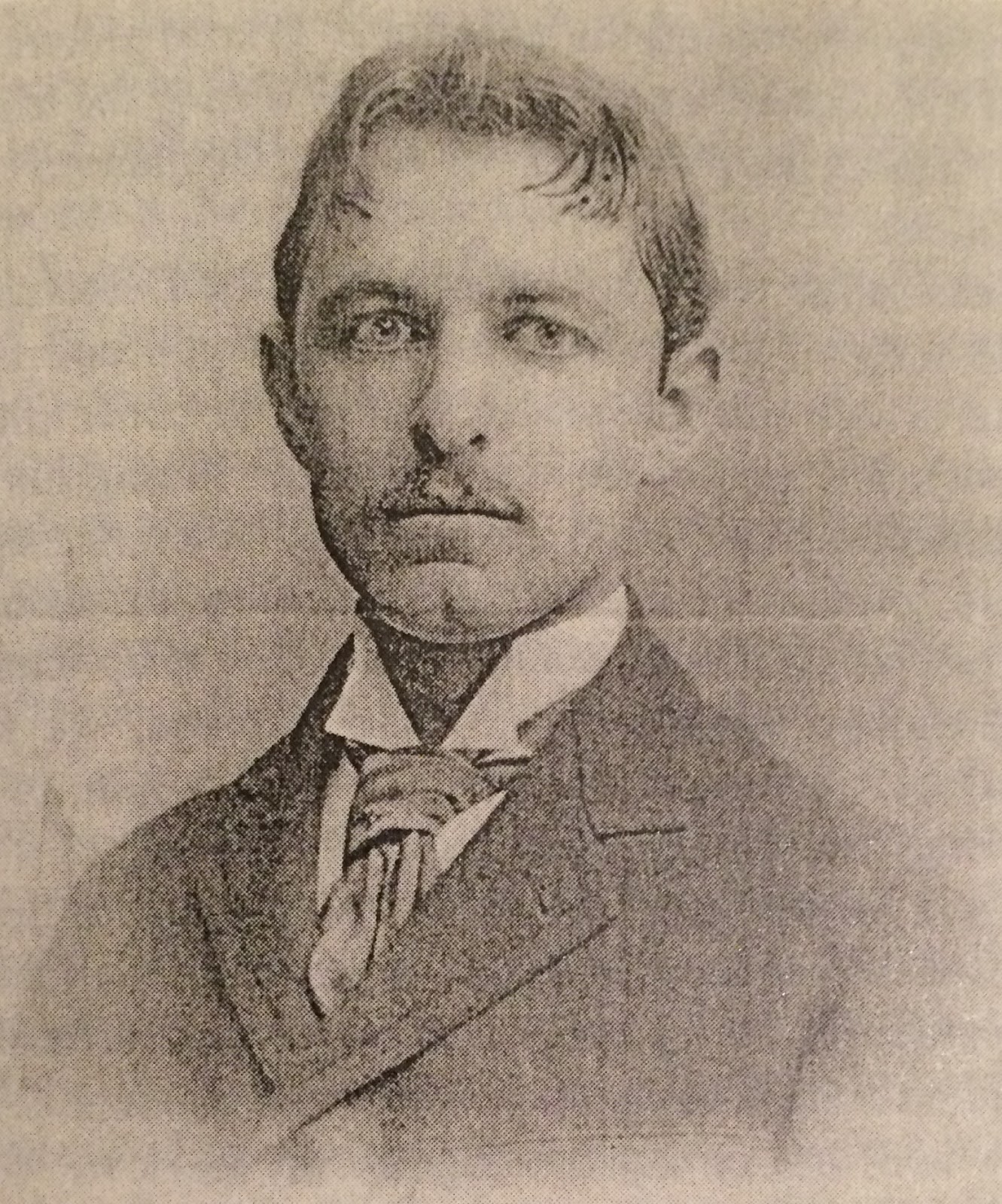
Thursday, August 13, 2015

Very Respectfully Yours, HW Mudgett

On November 2, 1895, in the Philadelphia, Pennsylvania Court of Oyer and Terminer, H. H. Holmes was found guilty of killing Benjamin Pitezel, his business partner/friend. The punishment for murder in the first degree: death.

Holmes tried to remove the nails from his rapidly sealing coffin by persuading the Pennsylvania Supreme Court to give him a new trial but they denied the appeal. It was on March 6, 1896, in the article pictured below, that the Philadelphia Inquirer reported, "Governor Hastings today named Thursday, May 7th, as the date for the execution…The Governor thought Holmes should have at least sixty days in which to prepare for death" and repent for the murder of Pitezel.


Holmes used his remaining time in prison to write either two or three different confessions. The most famous and well known was from April of 1896 when Holmes "confessed" to slaughtering 27 people. I write "confessed" with quotation marks because the document was riddled with lies and exaggerations. Some of the victims were still alive. Another had been killed in a train crash. But Holmes was dying regardless of what he did or said and knew people would remember a heartless monster far longer than a man who merely protested his innocence until the end. He was right as his story lives on almost 120 years after his death.


Aside from his various confessions, Holmes also wrote plenty of letters while behind bars. The recipients included Detective Frank Geyer, who found the bodies of the three missing Pitezel children, Carrie Pitezel, the widow of Benjamin, and Samuel Pennypacker.

(Samuel Pennypacker)

The Pennypacker letter still exists. Housed in the Library of Congress Rare Book room, it is tucked away inside the cover of a rare first edition copy of Holmes' Own Story.

A native of Pennsylvania, Pennypacker served as governor from 1903 to 1907. In 1889, he was appointed judge of the Court of Common Pleas No. 2. Pennypacker would eventually be promoted to President Judge but not until after Holmes wrote to him in January of 1896. "The Annual Report of the State Treasurer of the Commonwealth of Pennsylvania" for September 1896 (Holmes was executed May 7th) lists Pennypacker as "additional law judge."


In his letter, Holmes stated that he was writing at the request of his attorney, Samuel Rotan. When not representing himself in court, Holmes was represented by Rotan and William Shoemaker.

(Samuel Rotan)

(William Shoemaker)

The letter to Pennypacker reads:

Philadelphia County Prison Jan. 30 1896
To the Honorable Samuel W. Pennypacker
Court of Common Pleas

Dear Sir -

At the request of my attorney S. P. Rotan Esq. Ginard Bld. Phil. I take pleasure in addressing to your Honor these lines to which I append my, at present, very unenviable signature.

I am Sir, Very Respectfully Yours,

HW Mudgett M.D.
alias
HH Holmes


For once, Holmes was not explicitly writing to ask someone for a favor. It seems that Pennypacker may have contacted Rotan about getting Holmes' autograph, Rotan passed the message along to Holmes, and Holmes responded.

This wasn’t the last time Rotan was approached by relic seekers. Once the public learned Holmes would be executed, scientists, doctors, and lovers of the macabre offered to pay Rotan insane amounts of money for everything from Holmes' brain to his entire body. All requests were promptly denied. Though encased in concrete, the body of H. H. Holmes still remains fully intact ten feet under the grass of Pennsylvania's Holy Cross Cemetery. However, a piece of Holmes still remains behind in Washington, D.C.

Civil War General Joshua Lawrence Chamberlain once said, "Forms change and pass; bodies disappear; but spirits linger." It is impossible to touch that thin, worn paper, filled with ink and small bumps where the pen was applied with more than enough pressure and not sense the author coming alive again. And if you close your eyes, you can still feel the hand, the wrist, and the pulse of the man who changed America.


Until next time.

XOXO, Kate

The pictures of the Pennypacker letter are mine so please do not reprint them without permission. 

Friday, July 3, 2015

The 4th at the Fair

(I have written a previous post about 4th of July in the White City focusing on H. H. Holmes. You can read it here: Independence Day in the White City)

The main goal of the World's Columbian Exposition was to exceed even the highest of expectations. In 1889, Paris had hosted the Exposition Universelle (or EXPO Paris). America had a pavilion but it was seriously half-assed and next to bigger, larger displays of lavishness, it became a huge embarrassment for the States. So when Chicago built the White City in 1893, Americans everywhere sought redemption in the form of a titanic fair that not only rivaled the Exposition Universelle but toppled it.

Therefore, it is only fitting that the grand Chicago exposition would host an even grander 4th of July celebration. A 4th of July celebration to end all 4th of July celebrations. Devil in the White City (written by Erik Larson, click on the title to buy it) describes the luminous festivities in great detail. Seriously, it is amazing what people could create before our modern technology came along.

The fireworks show was planned by Frank Millett partly because what is 4th of July without fireworks but mainly to boost attendance "which despite steady week-to-week increases still lagged behind expectations." (Remember that the fair was only open until October). However, his work was almost grounded when storm clouds rolled in and threatened to downpour on Jackson Park. Thankfully, the sun returned in the afternoon and eventually yielded to a clear night sky.

Spectators arrived hours beforehand to secure good seats. Soon they were "massed a hundred deep" along the lake (sounds like modern day 4th of July in Washington, D.C.) chatting and occasional even singing to pass time. "One man began 'Nearer My God to Thee' and immediately a few thousand people joined in." Scattered amongst the throng was the entire Columbian Guard, the official police force of the fair. They were easy to spot being the only people wearing pale blue uniforms.

Aside from the shore, visitors wealthy enough to either own or charter boats strung decorative lights on their bows and anchored on the lake. Some spectators stood on the roof of the Manufactures and Liberal Arts Building which doubled as a large observation tower accessible via elevator.


It was here that hundreds unknowingly crossed paths with the Monster of 63rd Street. H. H. Holmes, along with Minnie and Anna Williams, watched the fireworks from the balcony.

As darkness fell, the fair lit up. "Thousands of Chinese lanterns hung from trees and railings and red lights glowed from each car of the Ferris Wheel." In case you were wondering, the wheel had 36 passenger cars. By that time, the crowd, according to Larson, "cheered for anything." Anything included the exposition orchestra's rendition of "Home Sweet Home," the Court of Honor's lights turning on, the searchlights on the previously mentioned observation deck (you can see one in the image above) sweeping the crowd like at a modern day rock concert, and plumes of water (often described in era newspapers as "peacock feathers") shooting from the MacMonnies Fountain (named for its sculptor Frederick MacMonnies).

The uproarious crowd suddenly hushed at 9 PM as if they were watching the ghost of Abraham Lincoln fly through the air. Okay, they were actually looking at a manned hot air balloon which was spotted due to the fact that it was carrying some sort of light flare below its basket. Without warning, the flare burst into sparks of red, white, and blue, forming a huge American flag in the sky. "Seconds later rockets began arching over the lakeshore. Men with flares raced along the beach lighting mortars, as other men aboard barges set off large rotating flares and hurled bombs" (I hope they got paid well for that job) "into the lake, causing the water to explode in extravagant geysers of red, white, and blue." This kept up without delay until the big finale. A network of wires strung on, ironically, Festival Hall exploded into a portrait of George Washington. Happy Birthday, America!

It has been 122 years since the World's Columbian Exposition and 239 years since we gained our Independence. And even though I'm a tad early, have an amazing 4th of July, everyone. From Jackson Park in the Windy City to wherever you are spending the day, may God bless America, from sea to shining sea, in the land of the free because of the brave.

Until next time.

XOXO, Kate

Saturday, April 4, 2015

A Tale of Two Castles

 
I took this picture while reading and documenting the only known original copy of Holmes' Own Story. (It is housed in the Rare Book Room at the Library of Congress).  
 
Pasted in the back of the book is a collection of newspaper articles published around the time of the Holmes-Pitezel Case. This one features a sketch of the World's Fair Hotel. On the right is my custom made Murder Castle hat. I think the likeness is pretty good.  

Until next time.

XOXO, Kate

Sunday, January 25, 2015

Perry's Peculiar Death

Benjamin F. Pitezel (friend/assistant/and business partner to H. H. Holmes) was murdered at 1316 Callowhill Street on September 2, 1894 in Philadelphia.

 
(A sketch of 1316 Callowhill Street from David Franke's The Torture Doctor)

Though his insurance policy was under his actual name, he was using the alias B. F. Perry while operating his phony patent office. Pitezel was under the impression that he and Holmes would work together to fake his death in order to defraud the Fidelity Mutual Life Insurance Company of $10,000. They were to split the money but Holmes had other plans. Wanting the money for himself, he actually killed Pitezel and then staged the room to make it look like an accident. (The company would not pay if they believed Pitezel/Perry had taken his own life). It was only after his arrest that Holmes would claim Pitezel had become distraught and committed suicide, leaving Holmes a note saying he should continue with their plan. However, at that point Holmes was no longer looking to make money. He was looking to avoid the hangman's noose.

Below is one of the first newspaper accounts published about Perry's Peculiar Death. (Pitezel would not be identified as Pitezel until Holmes contacted the company). It was printed by The Times in Philadelphia on September 5, 1894 (3 days after Pitezel was killed and 1 day after his body was discovered by inventor Eugene Smith).

The text reads as follows:

     B. F. Perry, who lived at 1316 Callowhill street, was found dead at his home early yesterday morning under extremely peculiar conditions. Perry was about 45 years of age. He came to this city two months ago and rented the house from S. K. Shedaker, who lives at 519 South Eleventh street. At the time that he secured the house he paid one month's rent in advance, exhibiting before Mr. Shedaker a large roll of bills.  

     At the house he used a room on the second flood as a laboratory, where he manufactured a washing powder and a cleansing compound. In making the latter he used benzine and several acids.

     Perry was last seen alive on Saturday evening when he appeared to be in the best of health. In the evening a messenger boy went to his house and handed him a telegram. Perry went into a saloon a few doors above, read the message and then returned to his house, closing the door after him, but not locking it. That was the last seen of him alive.

     On Monday morning Eugene Smith, who lives at 1827 Rhoades street, called at the house to help Perry unpack some goods which were to arrive there, and finding the door unlocked went in and called Perry. Receiving no answer he waited for a half hour and went away.

     Yesterday morning he went in the place again and found the door unlocked as before. Smith then became suspicious and started an investigation. As he climbed the steps he smelled a strong odor, and in passing an open door discovered Perry lying on his back on the floor with his right hand clasped over his heart and what appeared to be blood above his head. Smith was very much frightened and went to the Buttonwood street station where he informed the police of his discovery. Policeman Lewis and Special Policeman Sauers went to the house and made an investigation.

     It was discovered that an explosion had taken place, as the body was badly burned on the right arm and the hair was singed. It is supposed that Perry held in his right hand a bottle of benzine and was in the act of lighting his pipe when a terrible explosion occurred, knocking him to the floor. A doctor who was called in stated that the man's bladder was burst by the concussion evidently causing his death.

     The Coroner was notified and has the body taken to the Morgue. Two letters were found in his pockets dated St. Louis, August 29, from his wife and daughter, in which they expressed pleasure that he was getting along well, and said that they were coming on in a few days to live with him. Other things found on him were a Swiss watch, a pair of cuff pins, $2.00 in silver and a number of business cards.  

Few statements are correct.


It has never been mentioned anywhere else that Pitezel used the second floor for anything but a bedroom and the chance is rare that he would have. Since he was supposed to be operating a patent office, it seems unlikely that he would have also been running a lab to make "washing powder and a cleansing compound." The paper claimed that he used benzine and several acids to make the latter. Pitezel was a carpenter and sort of jack of all trades. He did not work with chemicals. But benzine and acids were tools of both the medical and pharmaceutical profession. (Holmes ran a pharmacy from his Castle and had worked in quite a few after graduating from college). And since benzine was one of the chemicals used to burn and disfigure Pitezel's face, it is likely that they were brought to Callowhill Street by Holmes and then used to fabricate a reason for the "accidental" death.

This was the tall tale printed in the article and later spun by Holmes to the company. Pitezel/Perry had lit his pipe too close to the bottles resulting in an explosion. This, Holmes believed, would explain why Pitezel was on the floor and account for his singed hair and disfigured body. The explosion, being at close range, badly burned the victim on his face and right arm. Though the article mentions how Pitezel/Perry might have "held in his right hand a bottle of benzine," this was later proved to be untrue and replaced with the equally incorrect theory that the bottles might have been on a shelf.

The investigators were much smarter than Holmes had predicted (Holmes thought he was the smartest man in the world) and started noticing holes in the plot that would not spell out an accidental death. First, if an explosion had occurred, the body would have been thrown backward, possibly into the wall, and landed in a disheveled heap on the floor. As the newspaper reported, "Perry [was] lying on his back on the floor with his right hand clasped over his heart," his left arm positioned straight out, and his clothes in perfect condition minus some burn marks. He looked as peaceful as if he were merely asleep. Second, if lighting his pipe too close to the chemical fumes (the bottles were supposedly open) caused the explosion, the pipe would have been shattered. Instead it was sitting in tact above Pitezel's head like it had been placed there. In a similar sense, the chemical bottles, though broken, appeared to have been dropped on the floor. An explosion would have caused them to break into tinier shards than the ones found.

Investigators also got a lucky break when the autopsy discovered a large amount of chloroform that had yet to be digested in Pitezel's stomach. Before CSI and advanced crime scene technology, large quantities of chemical substances needed to be present in order for them to be properly identified. Less chloroform and the chemical would have been passed over. Instead, it helped tighten the rope around Holmes' neck. He was never able to conjure up a believable explanation for the chemical's appearance. He claimed that Pitezel had committed suicide by drinking it but expert witnesses from the medical field said that Pitezel would have experienced spasms before death and been unable to place himself in the calm position he was found in. Holmes then claimed Pitezel had killed himself on the third floor and he had moved him downstairs and repositioned his body. The witnesses again stated an impossibility as, upon his death, a red fluid had seeped from Pitezel's mouth into the cracks in the bedroom floor boards. No fluid was found in any of the third floor rooms. Pitezel had died in the second floor bedroom. Holmes' final claim was that Pitezel had laid on the floor, put a towel over his face, and sucked chloroform from a jar into his mouth via a tube. The statement was so unbelievable that the court scoffed at the absurdity of it. What really happened was that Holmes, having found Pitezel in a drunken sleep, used chloroform first to sedate him, tied him up to prevent his clothes from showing signs of a struggle, and then administer a lethal dose of chloroform, saturated his face and clothing with benzine (so his "confession" states) and burned him so as to disfigure the features of his face. (Whether Pitezel was alive or at least conscious we will never know).

Why would Holmes sedate Pitezel first? Why would he then disfigure his face even though he had never done that to other victims?

Holmes knew that his ill-muscled 5 foot 8 inch frame was no match for the well built 6 foot 1 Pitezel, even if Pitezel was slightly drunk (Holmes must have known that Pitezel sometimes got into bar fights). In fact, Pitezel did not become Holmes' assistant until after the Castle was built. Before construction was complete he served as Holmes' bodyguard. Second, Pitezel told his wife, Carrie, that Holmes was going to procure a cadaver (a dead body used mainly for dissection practice in medical school classrooms) and disfigure it so they could claim it was Pitezel. However, the cadaver would not have the exact same features as Pitezel (obviously). Furthermore, the insurance company mandated that a family member of the deceased must positively identify the remains before any money would be paid. At the time Holmes thought this relative would be Carrie Pitezel who bore no special fondness for Holmes and was already leery about the plan. Should Ben Pitezel's features not be masked enough, she would recognize the man in the morgue as her husband, not a lookalike, and instantly reveal the scheme and declare Holmes a murderer, sending him on a one way trip to the gallows. Holmes would be happy to learn later that he would have to take the Pitezel's 15 year old (easily persuaded) daughter, Alice, to identify the body since Carrie had fallen ill.

The newspaper reported that Pitezel's body was taken to the city morgue after it was found. What they failed to mention was that the morgue was, ironically, located directly behind the Callowhill street house. Seriously. Only a small alley kept the buildings from bumping into each other. I have always found this interesting since Benjamin Pitezel did not get to choose the location of his patent office façade. That decision belonged to only one man: H. H. Holmes.

 
(A newspaper sketch of Pitezel which incorrectly spells his name)

Until next time.

XOXO, Kate

Saturday, October 11, 2014

The Strange Case of Dr. H. H. Holmes

This afternoon found me working on a research paper proposal for my Gilded Age class. Now that I'm finally finished for the night I have decided to relax by...doing more writing. I know. My brain is weird. But in my defense, Castle is not on right now. Also, I was told this class was going to have some Holmes discussions and midway through the semester I can report that my favorite (very handsome) multi-murderer has NOT BEEN MENTIONED ONCE! And since he's not included in any of our books, I'm starting to wonder if I've been duped into this three hour lecture course with a promise as hollow as a chocolate bunny. I swear, if Holmes is thrown into a sentence for two seconds and then never brought up again...well I'm not sure what I'll do at the moment. Maybe I'll show up to my professor's office hours dressed like Holmes and ask for directions to the nearest medical school while discreetly motioning to the (fake) skeleton hand sticking out the top of my valise. (My professor thinks I'm a wee bit obsessed with Holmes, which I deny, so that would definitely freak him out).

Okay, that's a joke. I won't dress or act like Holmes. However, I am finding ways to incorporate Holmes, Pitezel, and the rest of the gang into my various class assignments. (It's not hard considering Holmes was the human embodiment of the Gilded Age. I'm serious. When we talk in class about the skills needed to survive in Gilded Age America, my mind is all like, "Holmes, Holmes, Holmes, Holmes, Holmes"). (Alright. Maybe I am a wee bit obsessed with him).

Anyway, the last essay I had to write was about how the idea of democracy changed during the Gilded Age. I used the example of Pitezel and Holmes' partnership to show how workers were dependent on bosses.

Today I worked on the proposal for the final paper in which Holmes is one of two people I will discuss in depth. Among the sources I am planning to use for research is the book The Strange Case of Dr. H. H. Holmes by John Borowski and Dimas Estrada. It is the written accompaniment to the documentary (also by John Borowski) H. H. Holmes: America's First Serial Killer.


The book is a collection of four primary sources, some published for the first time since 1895. The titles include Holmes' Own Story, the autobiography Holmes wrote while awaiting trial in Moyamensing Prison. The same one in which he claimed to tell the real story about his life and supposed crimes (ahem-bullshit-ahem). It, along with his prison diary, was originally printed in 1895 and until this book was released the only way to see it was to visit the Library of Congress (where one of the few known copies is housed) and transcribe all 200 something pages yourself. (I cannot imagine doing that. It took me all day just to photograph the book).

The Holmes-Pitezel Case was also printed in 1895. It was written by Detective Frank Geyer (his attempt to cash in for his role in the unfolding events) and details his search for the missing Pitezel children. Also included is some word for word dialogue from the trial which is helpful since the actual transcript has never surfaced.

The Holmes Castle is a lesser known book from 1895, authored by Robert Corbitt. It gives some descriptions of the Murder Castle and talks about the lives of Holmes and a few of the known victims (though not always accurately since there were still many conflicting stories about who died where, when, and how).

Finally, the book includes The Confession of H. H. Holmes. Though there are a few confessions, this is the main one, published shortly before Holmes' execution, in which he "confesses" to murdering 27 people and attempting to kill 6 more. I say "confesses" because no one really knows how much truth can be given to statements that were born in Holmes' twisted mind. My guess is that he blended fiction and (some) fact to make his notoriety something history would remember.

Since these writings can be difficult to find, I would recommend purchasing this book (which is readily available on any book selling website). Even if you are not as obsessed with H. H. Holmes as I am, you will still find the information fascinating. After all, the words on the page (even if they aren't always truthful) came from the hands of the real people who experienced the stories we now learn about. You can't get any closer to history than that.

It's also humorous to watch Holmes try and explain away his guilt with fanciful tales of his innocence and good will toward others. (Nice try, Holmes. But no one believes that bullshit about how Benjamin Pitezel committed suicide. You still lose).

Until next time.

XOXO, Kate

Wednesday, August 27, 2014

A Message from the Mistress

Hi everyone.

I know it has been some time since something new has been posted. These past few weeks have been very busy and filled with various time consuming tasks, including an end of summer trek to Washington DC.

This week I began my third year of college and have been working on completing assignments, getting comfortable back on campus, and memorizing my constantly changing schedule (I had to switch around a few classes this semester).

Anyway, since I refuse to write, post, and have you read half formed thoughts, this message is here to tell you that the World's Fair Hotel will be closing for the next few weeks so the owner can focus on school work and finding an internship. I am NOT closing the blog forever. This is merely a short hiatus. In fact, I have some great posts planned (including one that concerns a fun little find from the Library of Congress) so make sure you stay tuned.

Until next time.

XOXO, Kate 

Tuesday, August 5, 2014

H. H. Holmes: Fan Maker

The other day I was out searching for a new bedroom fan since my old one began making this squeak noise that was impossible to sleep through. I finally found this one.


H. H. Holmes: Doctor, architect, businessman, multi-murderer, fan maker. I like it. (Imagine how that would look on a business card).

I'm happy to say that the fan works well. Which is good considering I purchased it mainly because Holmes is written on the front and it matches some of the décor. (I have a sign that says World's Fair Hotel and a hat that says Murder Castle as well).

Until next time.

XOXO, Kate

Wednesday, July 23, 2014

Tomb Raider: Dr. H. H. Holmes vs. President Abraham Lincoln

This is the first time I'm doing a cross blog post and intertwining my Murder Castle blog with my Civil War blog. The Holmes related information is here. To find the Lincoln related information, click here: Lincoln's Tomb.

I figured that instead of just writing facts about the graves of both men, I would be a little more creative and compare and contrast the tombs to see which would be harder to break into (there are pluses and minuses to each). Which do you think will prevail? Will it be the tomb of the World's Fair Serial Killer, Dr. H. H. Holmes? Or will it be the tomb of 16th President Abraham Lincoln?

DISCLAIMER:
 
THIS IS AN EDUCATIONAL (AND CREATIVE) POST DETAILING HOW THESE TWO MEN WERE BURIED. THIS DOES NOT PROMOTE GRAVE ROBBING OR BODY SNATCHING. LET THE DEAD REST IN PEACE! IF YOU DO NOT, YOUR DUMB ASS WILL BE ARRESTED AND I WILL NOT TAKE BLAME FOR YOUR STUPIDITY. YOU HAVE BEEN WARNED!

Now that all the bases are covered, here are the statistics concerning the burial of Dr. Holmes:


Good: There is a picture of his final resting place in Holy Cross Cemetery in Pennsylvania.


Bad: As the image shows, he is in an unmarked grave beneath a rather large plot (actually two plots combined) and the exact location of Holmes' tomb is unknown. We know he's somewhere under the dirt but that's about it.

Good: The man was a killer. No way around that fact. So there is little chance an armed guard is watching over his grave.

Bad: Because it is a cemetery, patrolling guards still could be present in the area. Some sides of the cemetery also back up to houses so there is the chance of someone seeing or hearing you moving about inside.

Good: Obviously no monument or memorial sits over his grave.

Bad: He is still buried ten feet down. (Remember that movie Holes? They only had to dig five feet). Some serious digging would be required in this situation.

Good: To get to him, just a shovel would be needed.

Bad: Should you actually get there, giant, heavy, and loud machinery will be needed to lift him from the grave since he is encased in a giant slab of cement. (Holmes' coffin was filled with ten inches of cement before he was placed inside. Once he was, his face covered with a handkerchief, the cement was poured over him and packed to the brim. The coffin was then sealed and taken to the cemetery. The next day, the double, ten foot grave was dug and the coffin was placed inside. It was covered with two feet of sand and cement. Finally, the dirt was shoveled back into place). It also took 24 men to move the coffin/cement slab to the grave in 1896. Unless you are actually Superman is disguise, I don't believe you will be able to move it with your own hands.

Good: You wouldn't have to blow up the cement block in the cemetery itself. Instead, you could attempt to move it up and out in one piece.

Bad: The graves are very close to each other and, according to Google Maps, Holmes is located in the center of the cemetery. Good luck getting a crane or a backhoe to and from the grave without damaging the other stones or attracting attention.

Looking at the facts, it would be a bit (a really small bit) easier to find Holmes' tomb than Lincoln's. However, you would most likely get arrested while attempting to drive a machine through the front gates. Let's face it. Both cases end with you getting hauled off to jail. But at least you can touch the ground in Holy Cross Cemetery before being overtaken by police. I doubt you would even get inside Oak Ridge Cemetery, let alone near Lincoln's tomb.

Until next time.

XOXO, Kate

Sunday, July 20, 2014

The Scarlet Mansion

The Scarlet Mansion is a book about the life and crimes of H. H. Holmes, beginning with his childhood in Gilmanton and ending with his execution in Philadelphia. It was written by Allan Eckert and published in 1985. After reading some reviews on Amazon and then procuring it from the library today, I decided it would make for a good first book review.


So far all I have read is the dust jacket. However, what stuck out to me there is that the tale is described as being "dramatic" but "lightly fictionalized." That is not necessarily a bad thing.

No one followed Holmes around every second of his 34 years and recorded what he did. With that being said, it is impossible to give a 100 percent accurate day by day account of Holmes' life. A light dusting of fiction sometimes means the author went above and beyond to get as close to the truth as possible and not embellish or insert his or her own opinion on what someone thought or did. However, it can also mean that the author considers "lightly fictionalized" merely getting names correct. Also, thankfully, nowhere have I noticed the two words historians dread.

BASED ON

Even though I hate seeing it happen, some authors choose to take the easy way out and put the words "based on" in the subtitle. Why? Because it means that the respective audience knows that just because something occurs in the story doesn't necessarily mean it occurred in real life. Therefore, the piece is not meant to be a learning experience. This also gives authors free reign to do no research and throw all historical accuracies out the window so they can write their own version of events with made up characters, incorrect dates, or, in the case of one example, ignore every first person account (including those written by Holmes), kill off characters at random, decrease the number of Pitezel children, and transform the skinny skirts of 1893 Chicago to the light up hoop skirts of a really bad Civil War reenactment. But I digress.

The reviews (13 in all) on Amazon, where the book currently holds four stars, go back and forth. One person gave it only one star and stated that the book was too long, filled with unnecessary information, and a work of pure fiction. Others gave it five stars for it's realistic feel and phenomenal writing.

I guess it's my turn to be the judge. Stay tuned.

Until next time.

XOXO, Kate

Friday, July 4, 2014

Independence Day in the White City

On July 4, 1893, the dark storm clouds that threatened to cancel the World's Columbian Exposition's grand fireworks show parted to reveal a beautiful night. Chinese lanterns hung throughout Jackson Park while red lights illuminated from the Ferris Wheel. Out on the lake, hundreds anchored their well lit boats and waited for the first rocket. Thousands crowded the fair and every Columbian Guard (the fair's police force) was on hand should problems arise.

Among the throng was H. H. Holmes and his guests, Minnie and Anna Williams. The trio stood with hundreds of others on the roof of the Manufactures and Liberal Arts Building. This "roof" actually doubled as a large observation tower that visitors could access via elevator. It spanned the length on the gigantic building and was one of the best vantage points for taking in the sights of the fair (and the Fourth of July fireworks display).

 
Minnie, Holmes, and Anna

The band struck up "Home Sweet Home," the buildings became outlined in gold, searchlights on the Liberal Arts Building came alive, and colorful jets of water poured from MacMonnies Fountain. Soon fireworks from all directions exploded in the night sky and ended with a giant light up picture of George Washington that flared from Festival Hall. Some said being on the roof of the Liberal Arts building was as close to heaven as they would ever get. But heaven was much closer that year.

Holmes, Minnie, and Anna waited hours for a train back home. That night, as they talked together in the flat Holmes had rented (located at 1200 Wrightwood Ave) to get Minnie out of his hotel, Holmes told the two women that the next day they were going to leave on a trip to Europe. Giddy with excitement, Anna wrote a letter home telling her relatives that they "need never trouble any more about me." It was the perfect ending to the day.

The next morning, Holmes took Anna on a tour of the Castle. Most, if not all, of the guests were out at the fair. He returned to the flat alone. When Minnie asked where her sister was, Holmes said she was waiting for them back at the hotel. Giving her his arm, they departed. Neither Minnie nor Anna Williams were ever seen again.

Anna's clothing trunk arrived in Chicago but no one could find the owner.

The Oker family who rented Holmes the flat were surprised when Holmes sent a letter surrendering it. They had never seen anyone leave and had heard nothing about a departure. Books with torn out fly leaves (what people would sometimes write their names on) and several other odd items were found left behind in the room.

An Englewood resident named Cephas Humphrey who made his living transporting large objects (furniture, crates, trunks) was hired by Holmes to carry away a box and trunk. Later, he recalled Holmes' strange instructions to "come after the stuff about dark as I do not care to have the neighbors see it." Both items were heavy and when Humphrey leaned the coffin like box on it's side, Holmes ordered, "Don't do that. Lay it down flat." The box went on a train to an undisclosed destination. The trunk may have been given to Charles Chappell, the same man who had stripped and mounted the bones of Julia Conner.

A few days later, Holmes gave Benjamin Pitezel's wife, Carrie, some dresses, shoes, and hats that belonged to Minnie (who he said was a cousin that had moved east). He suggested Carrie use the fabric to make clothing. Pat Quinlan, janitor of the Castle, was given trunks. Carved into both were the initials MRW.

Minnie and Anna Williams became the fourth and fifth victims of H. H. Holmes.

Until next time.

XOXO, Kate

Friday, June 27, 2014

Hotel Holmes

Post number 13 (which I consider good luck) finds me doing the blog's first (unofficial) review. I use the term unofficial because I am reviewing a video game (yes, a video game) that I have never tried, just seen.

Titled Hotel Holmes, the game was created by second year students at Teesside University (which is located in the United Kingdom in case you were wondering). The number of creators totaled 20 (10 artists and 10 designers) and this team (together known as the JourneyMan Project) had a mere 4 months to make a 3 level game.

I saw a good portion of Hotel Holmes on YouTube and have to give the genius creators some big merits. What these 20 people created in four months rivals what I have seen hundreds take years to create. They even did extensive research on the World's Fair Hotel, studying blueprints and records, so the virtual version would be as close to accurate as possible. And the fastest way to win points with me is to be concerned with the historical accuracy. (Every JourneyMan Project member gets ONE MILLION AWESOME POINTS). Aside from that though, Hotel Holmes was chosen as the best JourneyMan game of the year and was awarded with footage being presented at the University of Teesside booth at Eurogamer 2013.

This does not look like a basic school assignment. This looks like a real game that can be marketed and sold. As of now, there are no plans for this to happen. Believe me, I emailed one of the creators to check. But if the game ever did get released to the public, I would be first in line to purchase one. Yes, I would fly all the way to the UK to get the first game (and then blog about it). But onward to the good stuff.

Hotel Holmes consists of three levels that take place in various locations around the Castle (the basement, the attic, and the hotel). That might be the actual level order but don't quote me on it. The main (and only playable character) is a Priest (I cannot remember his name at the moment) who has been trapped in the hotel by Holmes. To escape, he must explore to building, completing puzzles and rescuing victims, all while evading the clutches of Holmes.

It's an interesting premise that in turn makes for an interesting game. But don't just take my word for it. Check out the action for yourself right here:


If the game was expanded, I think it would be awesome to play as Holmes or Benjamin Pitezel. You could even meet real life characters like Frank Geyer or Ned Conner in the game.
 
Personally, I would want to be Minnie Williams and subdue Holmes so I could take over the Castle myself. Maybe even open it as a real hotel and amass a nice fortune for myself. Female power!  
 
Until next time.
 
XOXO, Kate
 
And a shout out to Jonathan Cliff, the kind creator who answered my email. You can check out his website here:
 

Sunday, June 15, 2014

Music in the Castle

So I just discovered that there are a lot of songs about killers (thanks to the ever reliable Wikipedia that has an entire page devoted to track titles).

Of the dozens, I knew just one, the "Legend of Bonnie and Clyde" by Merle Haggard.

Fact: I like this song so much that I have it on my IPod. Another favorite and owner of a home on my IPod (though not owner of a home on the Wikipedia list) is "John Wilkes Booth" by Tony Rice.

Both songs are from the country genre (which I love). I find it is one of the best genres for songs like those mentioned above because it gives a good beat while still remaining calm and measured (I.E. no screaming) (which I don't find pleasing to listen to).

The Wikipedia list included a few songs on Holmes so I decided to look them up on YouTube and see if I could find another winner.

The first three were all death or thrash metal bands with scary cover art.

One song I couldn't understand because the lead singer was all but eating the microphone while yelling in a really deep voice that sounded (to me) like an abominable snowman impression. What I found amusing were all the comments that said something along the lines of, "YEAH MAN! I LOVE THIS SONG!" How did you understand the song? I needed either subtitles or a thrash metal translator.

Another was just dudes that had hair like ZZ Top had beards, whipping their heads back and forth, and shrieking at decibels that have not been accessed in the natural world.

But the search was not hopeless because I did find one song that did not cause my ears to bleed.

Alkaline Trio, a rock band (and if you know me then you know I LOVE rock), released a song called "Torture Doctor." While the song never mentions Holmes by name, you can tell that he is the inspiration.

Starting with the title, "Torture Doctor" was one of the various nicknames given to Holmes after his arrest. Other examples, the Murder Castle stood in the south side of Englewood, he shed his life as Herman Mudgett when he arrived in Chicago, and got away with his various crimes for some time before being caught.

The torture doctor is in
Back here to confess his sins
Knowing damn well he was dead wrong
And I can't believe my eyes
Trouble and regret haunt my mind
I'll let you take the whole thing down brick by brick
Tonight

And there's a devil dancing in my head
As I'm hovering above your bed

Hey, ho
We know how this story goes
Hey, ho
The plot it thickens and grows
Hey, ho
There's nothing left to hide
Hey, ho
Down here on the south side

I was the worst of my kind
I left me old life behind
Can't believe I got away with it so long
At the end of the day
There is nothing to say
So tired of being wired wrong
All my life

And there's a devil dancing in my head
As I'm hovering above your bed

Hey, ho
We know how this story goes
Hey, ho
The plot it thickens and grows
Hey, ho
There's nothing left to hide
Hey, ho
Down here on the south side
Down on the south side

Hey, ho
We know how this story goes
Hey, ho
The plot it thickens and grows
Hey, ho
There's nothing left to hide
Hey, ho
Down here on the south side
Down on the south side
 
I find the lyrics to be catchy and clever. Plus, you can't go wrong with a rocking beat that you can actually dance to.
 
 
Until next time.
 
XOXO, Kate

Tuesday, June 10, 2014

Marks of the Medical Profession

While doing some important Holmes related research (ahem-staring at his graduation photo-ahem) (no, I'm kidding, I was doing real research on the murder of B. F. Perry/Benjamin F. Pitezel) I came across a newsletter from the Philadelphia archives.

The article I read, CRIME, CRIMINALS, LAW ENFORCEMENT AND RECORDS, was written by Ward Childs and published in 1982. But what interested me was the short section Childs included about Holmes' arrest.

Though I have seen the mugshots, I have never seen the record describing Holmes upon his arrest. You know, the thing that all his measurements and physical characteristics were written on that historians love to mention with a few vague words like "wrote down height and weight" before moving on to the next point and I'm just there like:

  
I NEED FACTS!
 
But anyway, the above article actually mentioned some of the more elusive information I was seeking to find.
 
Herman W. Mudgett or H.H. Holmes, the notorious mass murderer, who was later hanged at Moyamensing Prison on May 7, 1896, was entered in this record after his arrest on November 17, 1894 for conspiracy and the murder of Benjamin F. Pitezel. The entry in the Register of Descriptions of Criminals reveals that Mudgett, who was arrested under the alias of H.H. Holmes also used the aliases of H.M. Howard, Alex E. Bond and Horace H. Williams. The Register reveals that he was a physician and druggist, who was born in Germantown, New Hampshire and living in Chicago, Illinois, and describes him as white, 34 years of age, 5 feet 7 inches in height and 148 pounds in weight with a medium build, slate blue eyes, dark complexion, scars on the first joint left thumb, above first joint left index, below second joint right index; a small pimple in front of left ear on cheek, a small mole on right cheek, small scars on forehead and scar on top of the head. However, even so detailed a verbal description would not have been sufficient for the purpose of identification by the Police. The Police also probably photographed Herman W. Mudgett for their rogues' gallery which had been introduced into the Detective Department in 1859; and measured his body according to the Bertillion system of measurement, which the Police had adopted on July 16, 1892. ( If he had committed his crime just eleven years later, Mudgett also would have been fingerprinted at this time.)

There are a few minor mistakes in this statements (Holmes was not yet 34 at the time of his arrest and was born in Gilmanton, not Germantown. In fact, I don't believe Germantown, New Hampshire is even a real place unless it has been renamed to something else).

However, what I find the most fascinating is the detail given to Holmes' various scars. I'm not sure how he would have gotten a scar on the top of his head (depending on where the "top" was) but it's interesting how most of the scars are on his hands. On the first joint left thumb, above first joint left index, below second joint right index.

Scars on the hands might mean a person often working with knifes or other sharp instruments. Being a doctor, Holmes would have been inclined to cut himself if he was not careful.

So even though Holmes kept the bloodstained tools of his trade hidden away, he actually wore the marks of his dangerous medical practice right on his skin.

Until next time.

XOXO, Kate

Sunday, May 18, 2014

Not Unless that Pillow Decorated Holmes' Bed

So this is what happens when you search H.H. Holmes on Etsy:


Until next time.

XOXO, Kate

Friday, May 16, 2014

Happy Birthday, Herman Mudgett

On May 16, 1861, Herman Webster Mudgett was born to Levi and Theodate Mudgett in the small hamlet of Gilmanton, New Hampshire. He was raised in a house that still stands in Gilmanton, though the private residence is not open to the public.


The Mudgett house in modern day Gilmanton.
 

His mother raised him to be a devout Methodist but his father, a hard drinking alcoholic, beat him senseless whenever he broke one of the strict house rules. I believe that the constant abuse as a child shattered young Herman's innocence and later became one of the reasons for his violent temperament, need for constant control, and disgust for all alcoholic beverages. Mudgett would carry his given name through his years on the Gilmanton farm and in medical school. It was when he arrived in Chicago around 1886 that he changed his name to Henry Howard Holmes. H.H. Holmes (which all documentaries like to say immediately after as if I can't figure out on my own what letters "Henry" and "Howard" start with).

The graduation photo of Herman W. Mudgett. It was taken around 1884 and still hangs in the hallway of his alma mater, the University of Michigan Medical School in Ann Arbor.
 
H.H. Holmes would live to be 34 years old. He would spend his final birthday in a Philadelphia prison before being executed there on May 7, 1896, just days before his 35th birthday. In his lifetime, Herman Mudgett/H.H. Holmes would change himself from a small town farmer to a doctor, architect, successful businessman, and the most dangerous man in America. He would earn, among other nicknames, the notorious title we still remember him by today: American's First Documented Serial Killer.
  
 
One of three known H.H. Holmes mugshots. This photo might have been taken upon his arrest in 1895.
 
Side note: I come close to sharing a birthday with Holmes. I was born May 15, one day sooner. Of course (in my mind) one day is pretty much the same day and therefore our almost shared birthday is still super awesome.    
 
Until next time.
 
XOXO, Kate

Saturday, April 26, 2014

I'm Supposed to Read This?

Since there have been no posts about the Chicago World's Fair, which was stationed about a mile away from Holmes and his Castle/Hotel, I figured I would make one.

There is one professor, who totally rocks by the way, that I have taken four classes with in two years. (And you know who you are if you're reading this). He's really fascinated with the World's Fair/White City so I brought in some opening day newspapers to show him. (In case you were wondering, the Chicago World's Fair opened on May 1, 1893).

What is fascinating about the papers is that the word are set over sketches. That is really hard to describe so I'm just going to post a few pictures.


I didn't know that they printed on picture paper as far back as 1893. I would have guessed that to be a more modern practice.

But here is the real question. How am I supposed to read that VERY SMALL TEXT over the picture? Seriously, how are you supposed to read that? Please enlighten me because just looking at the page is giving me a headache. My guess is that the piece was more for enjoyment (and to show how cool Chicago papers were) than providing information.

Until I can find some glasses to read with.

XOXO, Kate

Monday, April 14, 2014

You Know You're a Holmes Historian When...

You know you're a Holmes historian when you hear people talking about Holmes and automatically start thinking about the attractive (well he was) doctor that just so happened to operate a Murder Castle in Englewood, Chicago...and then realize that the conversation is about Sherlock Holmes and not H.H. Holmes.

 
The only Holmes when you're a Holmes historian.
 
Until next time.
 
XOXO, Kate

Sunday, April 13, 2014

Life Insurance for Chickens

As much as I love historical facts, sometimes I like a little historical levity too. And with the 149th anniversary of Abraham Lincoln's assassination tomorrow, I'm in need of a giggle. (Speaking of Lincoln, be sure to check out my Civil War blog tomorrow for all things Lincoln assassination related).

While reading through the book Depraved (author: Harold Schechter) I found a section that detailed a cartoon published while Holmes was in prison. During the time that his various crimes starting coming to light, other crimes (that he didn't commit) were being pinned to his name. Similar to what would happen years later with Bonnie and Clyde, when the police couldn't fine a perpetrator, they would hang the blame on Holmes.

In one example, according to Schechter, "newspapers throughout the country had published sensational accounts of a massacre in Jackson Hole, Wyoming. A tribe of 'hostile Bannocks' had butchered every white settler in the area."

The story turned out to be false. The problem arose because local cattle rustlers wanted the land and were attempting to drive the Bannocks off it. The Chicago Tribune ran a self mocking article before the truth was revealed.

"In the drawing, Holmes is shown standing in his jail cell, holding up a newspaper whose front page reads, 'BANNOCK INDIANS ON WARPATH - SETTLERS MASSACRED.'"

Holmes looks dismayed, not because of the deaths, but because he knows he'll be blamed for them (even though he's locked in a prison cell). His caption reads, "I AM INNOCENT!" However, when I found the actual cartoon, I saw that it said more than what Schechter had written.


The rest of the caption reads, "I HAD NO INSURANCE ON ANY OF THOSE SETTLERS." Holmes was known for taking out insurance policies on victims, then killing them and claiming the money. At the time, he was suspected of murdering Benjamin Pitezel in this way and the cartoon's artist was not letting the chance to poke fun at the doctor pass without notice. Personally, I find this cartoon rather humorous and clever. And it wasn't the only time someone made a witty insurance remark at Holmes' expense.

In one interview, Holmes claimed to have hatched a chicken in his cell, kept it, and took care of it for a month. I'm not sure how much truth there is in that tale since I can't see how no one would notice or hear a chicken, even though Holmes claims he hid it. (Where? I don't know considering he was living in a space the size of a telephone booth). However, Holmes said to his visitors, "it died, as all the things we love die in the world." Upon leaving the room, one of the two men remarked that sometime after hatching the egg, "Holmes doubtless had the chicken's life insured." 

Until next time.

XOXO, Kate

Tuesday, April 1, 2014

At the Corner of Wallace and 63rd Streets

As the World's Columbian Exposition closed its gates in October of 1893, H.H. Holmes also departed from Chicago, leaving his Castle, and whatever secrets were contained within the walls, behind him. However, he did attempt one final scheme in Englewood before turning his back to the city for good. Whether it was for the money or his own personal protection cannot be said. But knowing the score of Holmes, it was probably for both.

  
Unfortunately, no picture of the Castle has been found from when Holmes occupied it. Above is one of the earliest known photos and it was probably taken around 1895 when Holmes was in prison. The name on the pharmacy window reads "Robinson" and not "Holmes." 
 
During construction of his building, Holmes took out a fire insurance policy for it. The beneficiary was a man named Hiram S. Campbell, one of many fictitious alter egos used by Holmes. No one knows for sure if Holmes himself or one of his fellow conspirators (some suspect Patrick Quinlan, the hotel janitor) started the fire. It broke out in multiple places on the top floor, decimating most of the interior but causing minimal damage to the exterior or other floors (as shown by the picture above). Holmes then tried to collect $6,000 in insurance money. According to Erik Larson in Devil in the White City, "An investigator for one of the insurance companies, F. G. Cowie, became suspicious and began a detailed investigation. Though he found no concrete proof of arson, Cowie believed Holmes or an accomplice had started the fire. He advised the insurers to pay the claim, but only to Hiram S. Campbell and only if Campbell presented himself in person." Campbell never appeared to collect his money and the fire would not be the first change that would happen to the World's Fair Hotel in its proprietor's absence.      

On August 19, 1895, as Holmes sat languishing in his prison cell in Philadelphia, the money making dreams of a man named A. M. Clark went up, literally, in smoke. Clark had planned to lease the hotel and open it as a "murder museum" tourist attraction. The charge of 15 cents per person would buy a guided tour of the morbid site. However, just before Clark could receive his first paying customer, fire broke out at Wallace and 63rd streets shortly after midnight, destroying the top two floors of Holmes' building and causing slight damage to the first floor. According to Harold Schechter in Depraved, "At precisely 12:13 AM, George J. Myler - a night watchman at the Western Indiana railroad crossing - spotted flames shooting from the Castle's roof. Before he could turn in an alarm, a series of explosions rocked the building, blowing out the windows of Fred Barton's ground floor candy shop. By the time the first engines arrived the fire was already out of control. A half hour later the roof collapsed, taking down part of the building's rear wall. By the time the blaze was extinguished, at around 1:30 AM, much of the Castle had been consumed." No one ever discovered who started the fire. Some say it was an act of God but most historians believe it was either an accomplice trying to get rid of evidence the police had missed during the excavation or some outraged citizen that didn't want the building becoming a permanent part of the growing city.


Either way, the fate of the building was further condemned. The top floors were gutted and removed from the structure. However, the first floor shops were allowed to reopen about a year later. All remained in business until the building was finally torn down. For years the barren plot of land was left alone, bearing no signs of what had once stood there or who had crossed the threshold. It looked just as it had when it was first seen by Holmes. In 1938, the land was purchased by the United States government and a post office was placed (somewhat) on the site.

I say "somewhat" because the post office does not sit on the exact same area the Castle was built on. Just like Englewood itself, the plot does not look the same as it did in 1893. Part of the land is home to a parking lot, an overpass, a sidewalk, and a tree. The post office mostly sits next door to the Castle with a small overlap on 63rd street.

The Castle was shaped like the letter L, with the longer side being on Wallace, the shorter side being on 63rd, and the two sections meeting at the corner intersection.


The top photo shows the street layout while the other two show what sides of the building were on which street. (The middle one shows the Wallace side and the bottom one shows the 63rd side).

This is about where the post office sits:

 
So even though people love to say that they occupy the exact same space, they actually do not, though climbing the tree would put you into one of the asphyxiating rooms on the second floor. However, there is a slight overlap in the two structures. Part of the post office basement overlaps with what would have been the creepy Castle basement. In fact, there is a small section of a brick wall in the post office basement that is speculated to have been from the Castle, though this has never been proven. The idea of stepping into a piece of the Castle basement has lured many ghost hunters and their expensive equipment to Englewood. The above photo showing the overlap actually came from the following website where you can check out some of their paranormal related research:
 

The various transformations of H. H. Holmes' Castle show that nothing material can last the test of time. However, stories can live forever, always finding new ears to intoxicate.

 
Until next time.
 
XOXO, Kate

Thursday, March 13, 2014

Yours Truly, E. Alice Pitezel

After posting about a letter from Edwina Booth to her father, Edwin, I decided to stick with this letter theme and post about another, though much sadder, letter. A letter from Alice Pitezel to her grandparents.

At the time the letter was written, Alice and her sister, Nellie, were traveling with H.H. Holmes. Her brother, Howard, had already been killed. Being in hotel rooms for days on end, Alice passed the time by writing letters to her grandparents and to her mother, Carrie. She would then give them to Holmes to send. However, Holmes never sent them, instead keeping them in a small tin box for unknown (aka sociopathic) reasons. When he was arrested, the letters were found in his possession, confiscated, and given to the police. Because each letter had a date and place written on top, detective Frank Geyer was able to follow Holmes' twisting path across the country and find the dead bodies of Alice and her two siblings, sealing the fate of Holmes.

Many of the letters Alice wrote described her loneliness, homesickness, and sadness that her mother was not responding to her and had yet to come and visit even though Holmes had been promising to bring her. Holmes would leave the children alone for days to plot his next move. Aside from moving the three Pitezel children from city to city, he was also moving his "wife," Georgiana Yoke, and the children's mother, Carrie Pitezel, keeping up the charade that her husband, Benjamin, was still alive (Holmes had already killed him too). At one point, Carrie was staying less than a block away from her children with neither party knowing of the other. Below is a real photo of Alice and a newspaper sketch of her. She was 14 years old but some sources say she was 15.


Detroit, Michigan

Oct. 14, 1894

Dear Grandma and Grandpa,

Hope you are all well. Nell and I have both got colds and chapped hands but that is all. We have not had any nice weather at all. I guess it is coming winter now. Tell momma that I have to have a coat. I nearly freeze in that thin jacket. We have to stay in all the time, Howard is not with us now. We are right near the Detroit River. We was going a boat riding yesterday but it was too cold. All that Nell and I can do is draw and I get so tired sitting that I could get up and fly almost. I wish I could see you all. I am getting so homesick that I don't know what to do. I suppose Wharton walk by this time don't he? I would like to have him here. He would pass away the time a good deal.

Yours truly, 

E. Alice Pitezel  

Until next time.

XOXO, Kate